



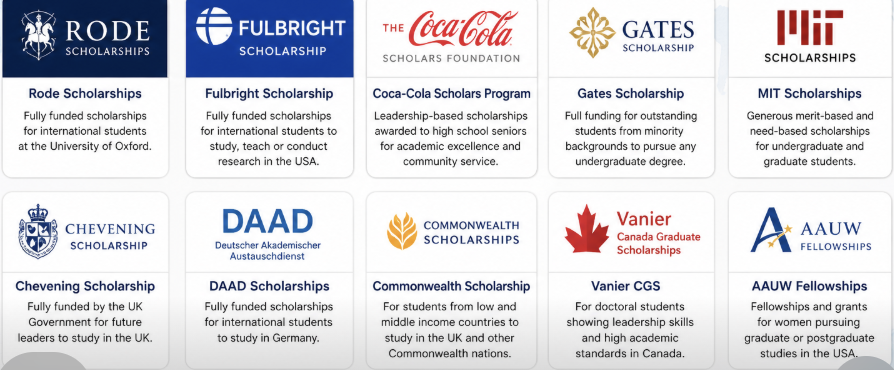
The Rhodes Scholarship is far more than an academic grant; it is arguably the most prestigious fellowship in the world. Each year, only about 120 students globally are selected to pursue postgraduate studies at the University of Oxford. Beyond the full financial coverage, it offers a literal seat at the table with a network of Prime Ministers, Nobel Laureates, and global pioneers.
However, a common misconception persists that the scholarship is reserved for those with the “perfect” resume or a 4.0 GPA. The truth is that while excellence is a prerequisite, the Rhodes Trust is searching for purpose, leadership, and the courage to lead.
1. Decoding the Rhodes “Core Pillars”
Before you write a single word of your application, you must understand the four foundational values established by Cecil Rhodes. They are not looking for someone who is merely “impressive”; they are looking for someone who is undeniable.
- Academic Excellence: You must prove you can handle the intellectual rigors of Oxford.
- Energy and Leadership: This isn’t just about titles; it’s about the drive to utilize your talents to the fullest.
- Character and Integrity: Traits like truth, courage, and devotion to duty are non-negotiable.
- Selfless Commitment: A core desire to solve global problems and “fight the world’s fight.”
2. Ensuring Baseline Eligibility
While the “exceptional” factor is what wins, you must first pass the technical gatekeeping.
- Age Requirements: Generally, candidates must be between 18 and 24 (though some jurisdictions allow up to 27 for specific circumstances).
- Academic Standing: A GPA of 3.7+ or a First-Class degree is the standard benchmark.
- Exceptionality: You must demonstrate a track record of doing something that stands out significantly from your peers.
3. Engineering a Rhodes-Level Profile
You cannot “cram” a Rhodes application in a few weeks; it is the result of years of intentionality. The committee looks for Depth + Impact over a long list of activities.
- Subject Mastery: Be a deep expert in one specific niche (e.g., Climate Policy or Neuro-oncology).
- Measurable Results: Don’t just list “Member of NGO.” Instead, show: “Raised $50k to provide education for 500 children.”
- Real-World Connection: Your work must bridge the gap between theory and the actual struggles of humanity.
4. Mastering the Application Components
The application is a multi-layered narrative. Every piece must align with your central mission.
- The Personal Statement (1,000 Words): This is the heart of your case. Avoid a “prose version of your resume.” Instead, start with a global challenge, connect it to your personal values, and articulate your vision for the future.
- The Study Objective (350 Words): This must be surgical. Explain why Oxford specifically is the only place for your research. Mention specific professors, labs, or unique courses.
- Letters of Recommendation: You typically need 5 to 8 letters. Choose 3 academic referees and 2 character referees who can share specific stories of your leadership and integrity.
- The 2-Page Resume: Focus strictly on results and impact. Use active verbs and quantify your achievements.
- Institutional Nomination: Most candidates must be endorsed by their home university before they can even apply to the Trust.
5. The Engagement Dinner: The Invisible Test
If you are shortlisted, you will attend a social dinner. Do not be fooled—this is a constant evaluation. The committee is observing your social intelligence and humility.
- The Strategy: Be genuinely curious about others. Ask thoughtful questions and avoid the urge to “perform” or brag. Treat the panelists like future collaborators rather than judges.
6. The Final Interview: The Deciding Moment
The interview is a 25–30 minute high-pressure conversation with 8–10 experts. They generally focus on three areas:
- Personal Values: Questions like “What do you stand for?” test your self-awareness.
- Ethical Depth: You may face moral dilemmas or philosophical questions about the meaning of integrity.
- Global Analysis: Be prepared to take a firm, logical stand on complex issues like geopolitics or social conflicts. Winners never sit on the fence.
7. Strategic Preparation and Mental Edge
To survive the final stage, your preparation must be rigorous but flexible.
- The 10-Mock Rule: Conduct at least 10–12 mock interviews with different people to simulate pressure and refine your “human” delivery.
- Thinking over Memorizing: Do not script your answers. Practice thinking on your feet so you remain conversational and authentic.
- Outcome Detachment: If you enter the room thinking you must win, you will freeze. Focus instead on being present and showcasing your genuine mission.
The Winning Formula: Summary
To stand out among the world’s best, your application must reflect four things:
- A Clear Life Mission: Not just vague ambition, but a specific “why.”
- Proven Impact: Hard evidence that you have already moved the needle.
- Intellectual Depth: The ability to think critically about the world’s most difficult problems.
- Strong Character: A rare blend of high-octane ambition and deep humility.
The Final Takeaway: The Rhodes Trust isn’t looking for the smartest person in the room—they are looking for the person who has the greatest potential to shape the future of the world.