
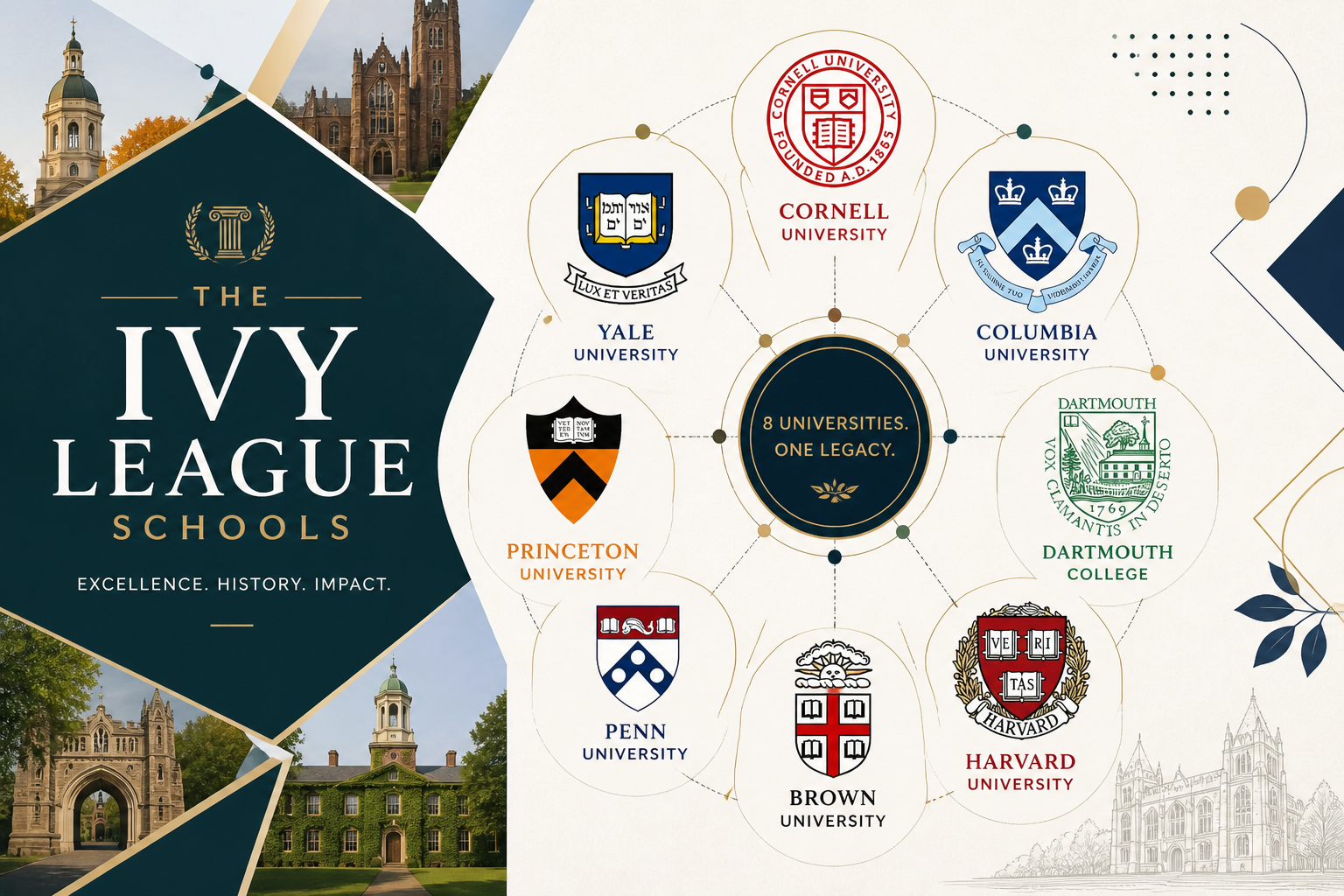
Let’s face the cold, hard facts of the modern admissions landscape: Ivy League acceptance rates now hover between a razor-thin 3% and 5%. This means that for every 100 brilliant students who apply, 95 to 97 are sent a rejection letter.
The most frustrating part? The vast majority of those rejected students had “perfect” profiles—straight As, high SAT scores, and a dozen extracurriculars. If everyone has a 4.0 GPA, then a 4.0 GPA is no longer a competitive advantage; it’s just the cost of entry. To win, you need a specialized system. This guide reveals the 98% Strategy, the exact framework the world’s most successful applicants use to move from “qualified” to “undeniable.”
1. The Death of the “Well-Rounded” Myth
The biggest mistake high schoolers make is trying to be “good at everything.” They join the debate team, play varsity soccer, and volunteer at a hospital—all while maintaining top grades. To an Ivy League admissions officer, this looks like a “confusing profile.”
Elite colleges aren’t looking for a well-rounded student; they are looking for a well-rounded class made of “pointy” students. They aren’t asking if you are a good person; they are asking: “Are you exceptional in one clearly defined area?”
2. Step 1: Defining Your Strategic Direction
Before you fill out a single form, you must pick your lane. This is your Field of Focus. Whether it’s AI ethics, macroeconomics, or pediatric medicine, every single item on your application should point toward this North Star.
- The Narrower, The Better: Don’t just say “Computer Science.” Say “Cybersecurity in emerging markets.”
- Narrative Clarity: When your activities align, you create a powerful, cohesive story that is easy for a tired admissions officer to remember.
3. Step 2: Selecting Your Archetype
Positioning is everything. To stand out among 50,000 applicants, you must fit into a recognizable Archetype. This is your professional “vibe.”
- The Entrepreneur: You don’t just join clubs; you build startups or NGOs that solve real-world problems.
- The Researcher: You work alongside university professors and aim for peer-reviewed publications.
- The Advocate: You are the voice of social change, working in policy, activism, or community organizing.
- The Academic: You dominate high-level competitions like the International Olympiads.
- The Specialized Athlete: You bring recruitment potential through elite-level sports performance.
The Goal: If the admissions officer can’t summarize you in five words (e.g., “The climate-tech policy kid”), you’ve failed Step 2.
4. Step 3: Proving Impact Through Metrics
This is where 90% of applicants stumble. They describe their responsibilities instead of their results. In the Ivy League, “participation” is a dirty word. You must show Scale and Metrics.
- The Amateur Way: “I tutored local kids in math after school.”
- The 98% Way: “Developed a proprietary math curriculum for 500+ students, resulting in a documented 30% increase in standardized test scores.”
- Why it works: Numbers provide objective credibility. They turn your “hobby” into a “proven track record.”
5. Step 4: Mastering the “Packaging” Phase
You can have a world-class profile, but if you package it poorly, you will still be rejected.
- The 60-Second Resume: Admissions officers often scan a resume in under a minute. It must be a “hits list” of leadership, results, and impact—not a grocery list of duties.
- The Personal Statement: This is your “Why.” Use a Past → Present → Future framework.
- Past: What sparked your obsession?
- Present: How have you pursued it with intensity?
- Future: How will this specific Ivy League campus help you change the world?
- Recommendation Letters: Don’t leave these to chance. Provide your teachers with a “Brag Sheet” detailing specific stories they can use to prove your character.
6. Step 5: The Final Filter—The Interview
If you make it to the interview, the college already knows you’re smart. Now, they are checking for cultural fit and authenticity.
- Be a Human, Not a Robot: They want to see someone they’d actually enjoy having in a seminar class.
- Clarity of Vision: You must be able to articulate your goals with total confidence. Practice mock interviews until your story feels like second nature.
The “Winning Formula” Summary
If you want to outperform 98% of the applicant pool, your application must be built on this foundation:
- Direct Focus: A specific field of interest.
- Clear Archetype: A recognizable identity (Researcher, Founder, etc.).
- High Impact: Quantifiable data that proves your influence.
- Flawless Execution: A narrative that ties your past to their university.